
«Μαλακό ή σκληρό εξώφυλλο; Τι είναι καλύτερο να επιλέξω;»
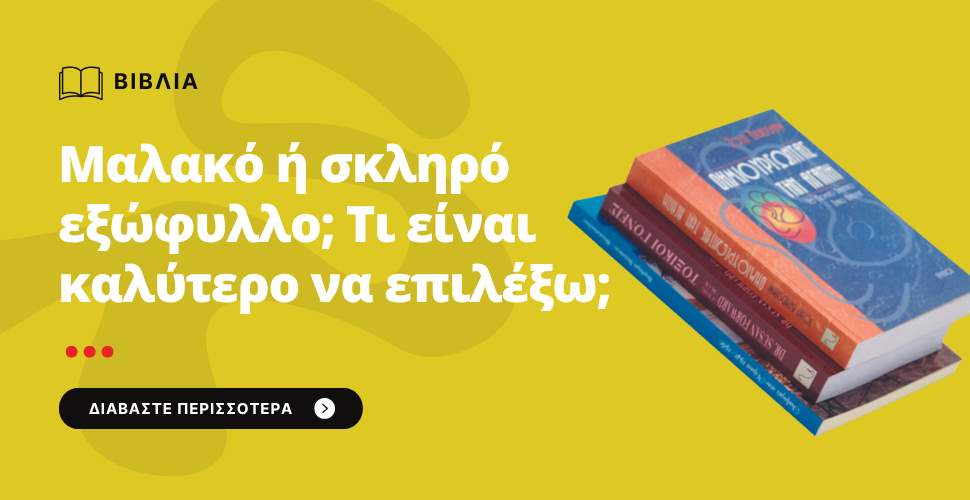
«Μαλακό ή σκληρό εξώφυλλο; Τι είναι καλύτερο να επιλέξω;»
Η επιλογή μεταξύ μαλακού εξωφύλλου (paperback) και σκληρού καλύμματος (hardcover) είναι σημαντική απόφαση στην εκτύπωση ενός βιβλίου και επηρεάζει
• την αισθητική
• το κόστος
• τη λειτουργικότητα
• και την εμπορική ταυτότητα του παραγόμενου έργου.
Ας δούμε τι είναι το καθένα, σε τι διαφέρουν και πότε επιλέγεται το ένα ή το άλλο.
________________________________________
1. Μαλακό εξώφυλλο βιβλίου (Paperback): Χαρακτηριστικά & πλεονεκτήματα
Χαρακτηριστικά:
• Εξώφυλλο από χαρτί 250–350 gsm, με πλαστικοποίηση (ματ ή γυαλιστερή) εάν επιλέξουμε ένα velvet χαρτί εξωφύλλου.
• Εξώφυλλο από χαρτί 250–350 gsm, χωρίς πλαστικοποίηση εάν επιλέξουμε ειδικά χαρτιά εκτύπωσης εξωφύλλου όπως είναι το aquarellio, tintorento, natural evolution, ambergraphic κλπ σε αποχρώσεις τόσο λευκού όσο και ιβουάρ.
• Εκτύπωση εξωφύλλου με ειδική εφαρμογή εξωφύλλου όπως θερμοτυπία, ανάγλυφο, χρυσοτυπία, ασημοτυπία, UV.
• Εύκαμπτο, ελαφρύ, πιο οικονομικό.
• Δέσιμο συνήθως με κολλητή ράχη (βιβλιοδεσία κόλλας).
✔ Πλεονεκτήματα:
• Χαμηλότερο κόστος παραγωγής.
• Ελαφρύτερο και εύκολο στο κράτημα του και στη μεταφορά του.
• Ιδανικό για λογοτεχνία, ποίηση, εκπαιδευτικά, μικρές ή μεγάλες αυτοεκδόσεις.
• Πιο εύκολη αποθήκευση και διανομή.
• Ευέλικτη και προσιτή επιλογή εκτύπωσης είτε τυπώνεται το βιβλίο ψηφιακά είτε offset.
• Χωρίς ανάγκη εκτύπωσης μεγάλου αριθμού βιβλίων.
✔ Μειονεκτήματα:
• Λιγότερο ανθεκτικό (φθείρεται πιο γρήγορα με τη χρήση, κυρίως όταν το εξώφυλλο δεν έχει πλαστικοποιηθεί).
• Δεν αποπνέει "πολυτέλεια" σε σχέση με το σκληρό εξώφυλλο.
✔ Κατάλληλο για:
• Μυθιστορήματα, λογοτεχνικά κείμενα, ποιητικές συλλογές
• Αυτοεκδόσεις
• Εκδόσεις σε μεγάλο τιράζ
• Βιβλία που πωλούνται σε οικονομικότερη τιμή
________________________________________
2. Σκληρό εξώφυλλο βιβλίου (Hardcover): Πότε να το επιλέξεις
Χαρακτηριστικά:
• Εξώφυλλο από χαρτόνι 1,5–2,5 mm, πάχους.
• Το κάλυμμα, μπορεί να είναι είτε με εκτύπωση τετράχρωμη σε χαρτί με πλαστικοποίηση, είτε δερματίνη, είτε πανί, ή ύφασμα με επιλογές χρυσοτυπίας ή ασημοτυπίας).
• εσώφυλλο - ντυμένο με υλικό (π.χ. χαρτί λευκό χωρίς εκτύπωση , τυπωμένο ή ατύπωτο χρωματιστό χαρτί)
• Μπορεί να έχει επένδυση, σχοινάκι/σελιδοδείκτη
• Πιο στιβαρό, δένεται συχνά με ραφή + κόλλα (ραφτοκολλητό).
✔ Πλεονεκτήματα:
• Πολύ πιο ανθεκτικό.
• Αποπνέει πολυτέλεια και ποιότητα.
• Κρατάει στο χρόνο (ιδανικό για δώρα, συλλεκτικά, βιβλιοθήκες).
• Μπορεί να έχει πιο δημιουργικό design.
• Αντέχει στην επίπονη χρήση.
✔ Μειονεκτήματα:
• Πιο ακριβό στην παραγωγή (30–100% πάνω σε σχέση με το μαλακό εξώφυλλο).
• Βαρύτερο, πιο δύσκολο στη μεταφορά.
• Περισσότερος χρόνος για την παραγωγή
• Συνήθως απαιτείται μεγαλύτερος αριθμός εκτύπωσης βιβλίων λόγω παραγωγικής διαδικασίας.
✔ Κατάλληλο για:
• Πολυτελείς ή επετειακές εκδόσεις
• Παιδικά βιβλία (που αντέχουν στη χρήση από τους μικρούς μας φίλους)
• Λευκώματα / φωτογραφικά βιβλία
• Συλλεκτικά ή περιορισμένου τιράζ συγγράμματα
• Βιβλία-δώρα
________________________________________
✔ Σύγκριση σκληρού και μαλακού εξωφύλλου
| Μαλακό εξώφυλλο (Paperback) | Σκληρό κάλυμμα (Hardcover) | |
| Κόστος | Χαμηλό | Υψηλότερο |
| Βάρος | Ελαφρύ | Βαρύ |
| Εντύπωση | Καθημερινή / απλή | Πολυτελής |
| Διανομή | Εύκολη | Πιο δύσκολη / πιο ακριβή |
| Κατάλληλο για | Μαζική κυκλοφορία | Συλλεκτική / πιο ποιοτική έκδοση |
| Χρόνος παραγωγής | Γρήγορος | Πιο αργός |
Ποιο εξώφυλλο να διαλέξω; Συμβουλές ανάλογα τη χρήση
Διάλεξε μαλακό εξώφυλλο αν:
• Θες να εκδόσεις οικονομικά το βιβλίο σου.
• Απευθύνεσαι στο ευρύ κοινό (λογοτεχνία, ποίηση).
• Στόχος είναι η μαζική διανομή ή πώληση μέσω βιβλιοπωλείων.
Διάλεξε σκληρό κάλυμμα αν:
• Θες να δώσεις αίσθηση κύρους και πολυτέλειας.
• Πρόκειται για δώρο, επετειακή ή συλλεκτική έκδοση.
• Το περιεχόμενο είναι καλλιτεχνικό, παιδικό, premium.
________________________________________
Μπορείτε να δείτε δείγματα δουλειάς μας , είτε μέσω της ιστοσελίδας μας https://printhouse.gr/proionta, είτε επισκεπτόμενοι το κατάστημα μας Ναυπλίου 9 και Πέτρας 17 Κολωνός – Αθήνα. Ανάλογα με το τελικό επιθυμητό παραγόμενο αποτέλεσμα, μπορείτε να αποφασίσετε τι τελικά επιθυμείτε να εκτυπώσετε. Είμαστε δίπλα σας σε κάθε εκτυπωτική σας ανάγκη. Πάρτε μια προσφορά συμπληρώνοντας την αντίστοιχη φόρμα https://printhouse.gr/biblia-l... ή μέσω email info@printhouse.gr
Πρόσφατα Άρθρα

- Η εταιρία μας δραστηριοποιείται στο χώρο των εκδόσεων και εκτυπώσεων εδώ και 50 χρόνια. Παρέχει ένα ευρύ φάσμα προϊόντων εκτύπωσης και έντυπης επικοινωνίας για την κάλυψη των ατομικών ή εταιρικών αναγκών σας.
Η ΕΤΑΙΡΕΙΑ
 Αθήνα, Ναυπλίου 9 & Πέτρας 17
 info@printhouse.gr
 +30 210 5156300
 Δευτέρα - Παρασκευή: 9:00 - 17:00
- Βρείτε μας στο Χάρτη
- Αριθμός ΓΕΜΗ 83021902000